


HVAC Spring Maintenance Checklist: Get Your System Ready Before Summer

Terry Okafor
Master refrigeration tech and NATE-certified instructor who moonlights as the magazine's advice columnist. His 'Ask Big Terry' mailbag has been settling shop disputes and diagnosing mystery leaks since 2011.
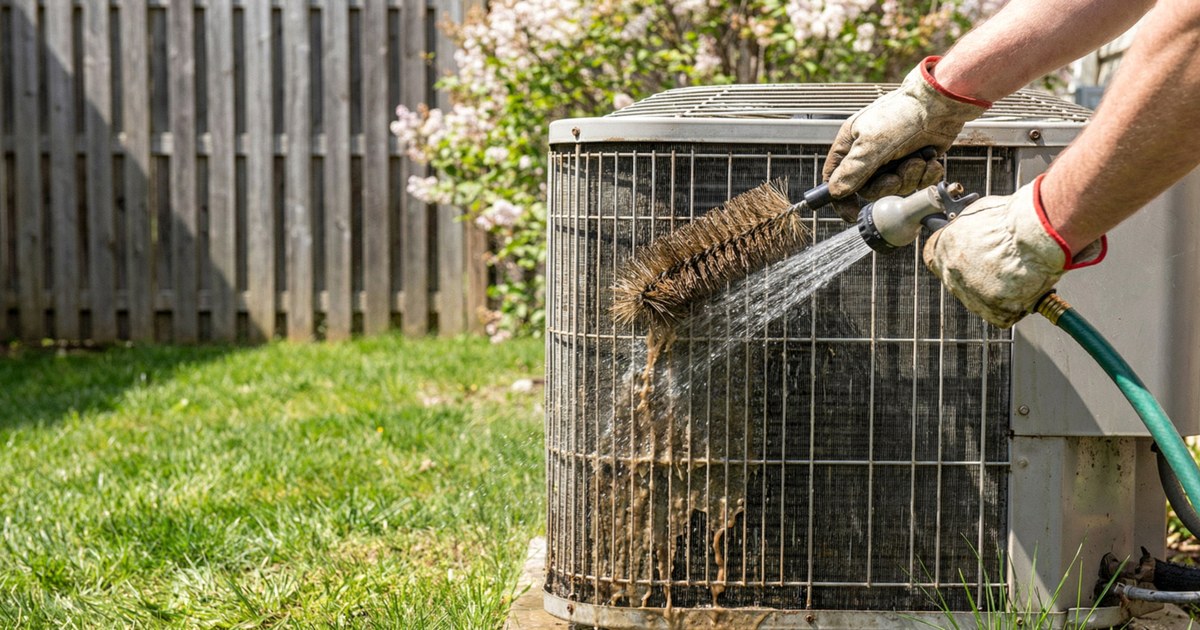
Spring maintenance on a central air system is the one service call that pays for itself three times over. A clean, tuned system runs more efficiently, lasts longer, and fails less often during the months when customers need it most — which is also when parts are backordered and every tech in the city is booked two weeks out. Get the work done in March or April, before the first 90-degree day resets everyone's priorities.
Here's the full checklist, broken into sections. I run through this in order on every spring maintenance call. Print it, laminate it, stick it in your truck.
1. Air Filter — The Starting Point for Everything
A clogged filter is the root cause of more HVAC problems than any single component failure. Restricted airflow drops static pressure, freezes evaporator coils, strains blower motors, and makes the whole system work harder for less output. Start here every time.
Pull the filter before you do anything else. Hold it up to a light source. If you can't see light through it, it needed changing a month ago. Check the filter rack for the correct filter dimensions — mismatched filters with gaps around the edge are nearly as bad as a clogged one because they let unfiltered air bypass the coil.
Filter sizing notes for SoCal systems: Most Southern California residential systems use 16x20x1, 20x20x1, or 20x25x1 filters. Media cabinet systems (4-inch slot) are increasingly common in newer construction. The MERV rating on the existing filter tells you what the system was sized for — don't upgrade to a thicker, higher-MERV filter without checking the static pressure rating. A MERV-16 in a system sized for MERV-8 will restrict airflow and cause the same problems as a clogged filter.
Mark the installation date on the filter frame with a Sharpie every time you change it. Three-dollar solution that answers every "when did you last change the filter?" question before the homeowner can even finish asking it. Do it for your customers, teach them to do it themselves.
2. Outdoor Condenser Unit — Cleaning and Inspection
The outdoor unit spends all winter collecting debris, cottonwood, leaves, and whatever else the wind deposits in the coil fins. All that material insulates the coil, reduces heat transfer, and forces the compressor to work at higher head pressures than it was designed for.
Coil cleaning procedure:
- Turn off power at the disconnect box before touching anything.
- Remove the top grille and fan assembly. Set aside — don't let it hang by the wiring.
- Rinse the coil from inside out with a garden hose. Work top to bottom. Flush debris out through the coil face, not deeper into it.
- For heavier fouling, apply coil cleaner (Nu-Calgon 4171-75 or equivalent), let it dwell 5-10 minutes, rinse thoroughly.
- Straighten bent fins with a fin comb. A fin density of 14-16 fins per inch is typical. Even a 15% bent fin area significantly impacts coil efficiency.
- Reassemble and restore power.
Visual inspection checklist while you're in there:
- Contactor contacts: look for pitting, carbon tracking, or contacts that aren't fully closing. Replace if contacts are eroded more than 50%.
- Capacitor: check MFD rating with a capacitance meter. Replace if more than 10% below nameplate. This is the single most common spring failure — a capacitor that's borderline in spring will fail dead in July.
- Refrigerant line insulation: see Section 4 below.
- Wiring: look for rodent damage, cracked insulation, loose connections.
- Compressor: listen for abnormal noise, check for oil streaks around the casing (indicates a leak).
When you replace a dual-run capacitor in spring, note the MFD ratings for both the compressor and the fan motor windings. Mismatched capacitors cause motor failure — the new capacitor has to match the nameplate, not just "close." A 45/5 MFD unit does not substitute for a 35/5 MFD, even though they look identical.
3. Testing Thermostat Modes Before Summer
The thermostat is the one thing that gets ignored all winter and then blamed for everything in summer. Five minutes of mode testing in spring catches problems before they become emergency calls.
Cool mode test: Drop the set point 5 degrees below current room temperature. The system should start within 3-5 minutes. Listen for outdoor unit engagement — both the compressor and condenser fan should start. Confirm cooling airflow at the registers within 10 minutes.
Fan mode test: Switch to "Fan On" (continuous fan, no compressor). Airflow at registers confirms the blower is operational and the controls are reading the thermostat correctly.
Mode switching: Set back to "Cool" and confirm the compressor cycles correctly. If the outdoor unit hums without starting on the first call, the capacitor is suspect (see Section 2).
For smart thermostats — check firmware update status, verify the C-wire connection is secure, and test remote access from the homeowner's phone while on-site. These save callbacks.
Thermostat replacement trigger: A thermostat that's more than 10 years old, reads temperature erratically, or requires repeated adjustment to maintain setpoint should be replaced preemptively. A Honeywell T6 Pro or Ecobee Smart runs $50-120 and eliminates this variable for the next decade.


4. Refrigerant Line Insulation Check
The suction line — the large-diameter insulated copper pipe running from the outdoor unit through the wall — needs intact foam insulation to prevent condensation and maintain refrigerant temperature. In Southern California, UV exposure degrades foam insulation faster than in most climates. A line that looks fine in October can be crumbling by April.
Walk the full suction line run. Look for:
- Cracked or missing foam sections (especially at the exterior penetration point and near hangers)
- UV-bleached insulation (it'll be stiff, pale, and crumble when squeezed)
- Exposed copper (condensation drips, energy loss, potential ceiling water damage)
Standard repair: Armaflex or equivalent closed-cell foam pipe insulation, 3/4-inch wall thickness minimum for suction lines in warm climates. Cut to length, slit lengthwise, wrap with UV-resistant tape at all seams and terminations. This is a 15-minute repair that prevents $500 ceiling damage and 10% efficiency loss.
The liquid line (small-diameter, uninsulated) doesn't need insulation but should be checked for contact with sharp edges, structural framing, or any spot where vibration can chafe the copper.
5. Condensate Drain Cleaning
The condensate drain carries water that condenses on the evaporator coil. In Southern California, a residential system in cooling mode produces 5-20 gallons of condensate per day, depending on humidity and runtime. All of that water has to go somewhere. When the drain clogs with algae, sediment, or debris, it goes on the ceiling.
Primary drain line cleaning:
- Locate the drain pan under the air handler (inside the air handler cabinet or visible in the attic above it).
- Pour 1 cup of white vinegar into the drain port every spring. Kills algae, no damage to lines.
- For established clogs: wet/dry vacuum on the exterior drain termination point pulls the clog out. Most residential drain lines are 3/4-inch PVC — a standard shop-vac adapter seals over the end.
- For persistent clogs or suspected drain pan cracks: flush with a drain gun (Rectorseal or equivalent) from inside.
Secondary drain check: Most California-installed systems have a secondary drain line that terminates at a visible exterior location — often over a window or the garage door. If there's water coming out of the secondary drain, the primary is clogged. That's the warning system working. Don't ignore it.
Float switch: Many modern systems have a float switch in the drain pan that shuts the system off if water reaches a certain level. Confirm it's functional by adding water to the pan until the switch triggers and the system shuts off. If the system keeps running, the switch is bypassed or failed. Replace it — a float switch is a $15 part that prevents thousands in water damage.
6. When to Call a Tech
This checklist covers routine maintenance that a competent homeowner can handle with basic tools. Call a professional for:
- Low refrigerant: Adding refrigerant is EPA-regulated work. If the system is low, there's a leak. Finding it, repairing it, and recharging requires EPA 608 certification, recovery equipment, and manifold gauges.
- Compressor or electrical diagnosis: Anything involving metering voltages at the disconnect, capacitor, or contactor while the system is energized. 240V HVAC work has killed experienced techs who got complacent.
- Evaporator coil cleaning: Accessing the coil inside the air handler requires partial disassembly. On some systems, an incorrectly reassembled coil housing creates dangerous air bypasses that put carbon monoxide from a co-located furnace into the living space.
- Refrigerant line repairs: Brazing requires certified refrigerant handling and proper equipment.
For summer cooling system troubleshooting beyond maintenance, our AC not cooling diagnostic guide covers the full fault tree from thermostat to compressor. And if you're considering upgrading from a central system to a ductless setup, the mini-split installation guide for Southern California covers what's involved and when it makes sense.
Spring Maintenance Checklist — Quick Reference
Print and laminate this for the truck:
- Air filter inspected and replaced
- Outdoor condenser coil cleaned
- Contactor contacts inspected
- Dual-run capacitor tested (MFD within 10% of nameplate)
- Refrigerant line insulation inspected and repaired
- Thermostat tested in Cool and Fan modes
- Condensate drain flushed and tested
- Float switch function verified
- Secondary drain termination checked
- Wiring and connections inspected
- Outdoor unit clearance confirmed (18 inches minimum on all sides)
When should I schedule HVAC spring maintenance in Southern California?▾
March through early April is ideal — before the first heat wave, when techs are available and parts are in stock. Once May hits and temperatures climb, scheduling extends to two weeks out and demand prices go up. The work takes the same time, but the urgency costs you.
Can I clean the outdoor condenser coil myself?▾
Yes, with care. A light rinse from inside out with a garden hose is homeowner-safe. Commercial coil cleaners require PPE and thorough rinsing. If fins are heavily bent or the coil is packed with cottonwood debris, a tech with a fin comb and proper cleaner will get a more thorough result without risking coil or fan damage.
How do I know if my condensate drain is clogged?▾
Water in the secondary drain pan under the air handler, water stains on the ceiling near the unit, or the system short-cycling and shutting off (if a float switch is installed) are all signs of a primary drain clog. In attic-mounted systems, a clogged drain is a water damage emergency — fix it immediately.
Need a repair professional?
Get free quotes from verified technicians in your area.
Find a Pro Near You