


Sub-Zero Condenser Cleaning: The Service Call That Builds a Book of Business

Dale Resnick
A 30-year veteran of residential HVAC who's crawled through more attics than he can count. Dale writes the 'Duct Tape & Beyond' column and believes every compressor tells a story if you listen close enough.
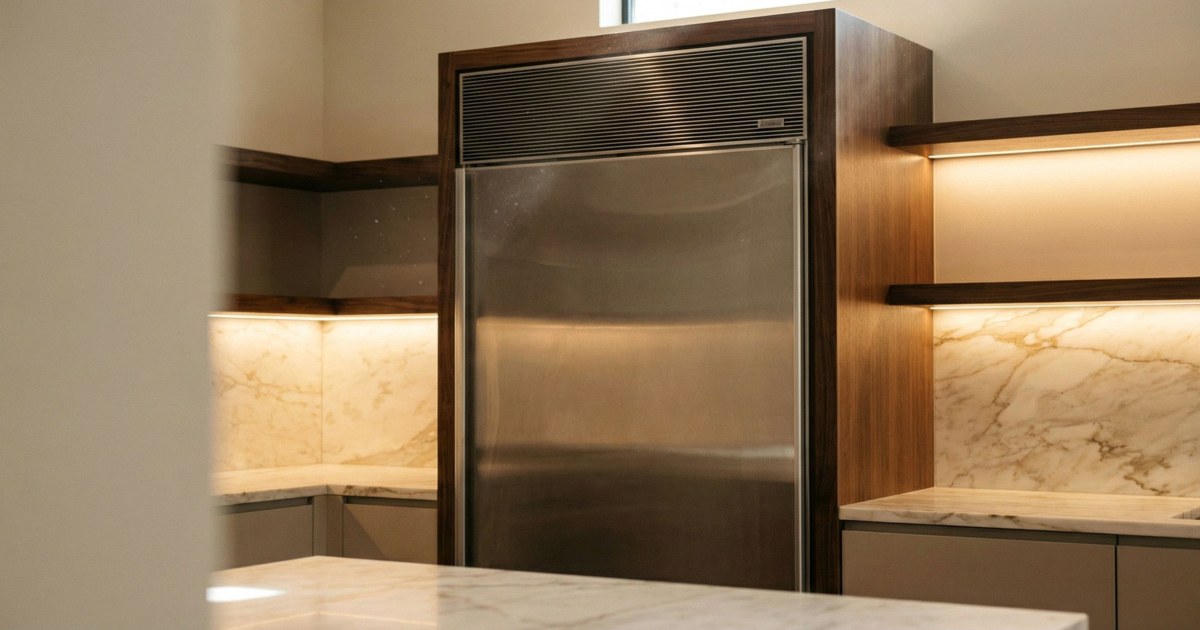
Sub-Zero recommends professional condenser cleaning every 6 to 12 months. Most homeowners don't know this. That gap between what Sub-Zero recommends and what actually happens is your opportunity.
A condenser cleaning takes about 45 minutes, pays $250-350, and puts you inside the home of someone who spent $10,000 to $20,000 on a refrigerator. These customers understand maintenance. They budget for it. And they don't flinch at the bill because they already know what a Sub-Zero compressor replacement costs if the unit is neglected. (It's $1,500-3,000, in case you're wondering.)
Why These Condensers Need Attention
Most residential refrigerators have a condenser coil on the back or underneath. Sub-Zero built-in units are different. Depending on the model, the condenser sits on top of the unit or behind a rear panel, integrated into the cabinet design. Kitchen air (grease, pet hair, cooking particulate) accumulates on these coils faster than on a freestanding fridge, and the impact on performance is measurable.
A dirty condenser forces longer compressor run times. Energy consumption jumps 15 to 30 percent. Internal temperatures become inconsistent, with the fridge side warming up while the freezer holds. In severe cases, the compressor overheats, trips the thermal overload, and shuts down intermittently. Let it go long enough and you're shortening compressor life on a unit where the compressor alone runs four figures.
Position this as preventive maintenance, not a repair. A customer who owns a Sub-Zero already understands the concept of protecting an investment. A $300 annual cleaning is an easy conversation when the alternative is a $2,500 emergency compressor job.
Finding the Condenser
On the Classic Series (BI-36, BI-42, BI-48), the condenser is top-mounted behind the upper grille. Push-tab release on most models. The PRO Series (PRO 36, PRO 48) is similar but uses a larger coil to match the higher BTU output. Snap-on grille comes off from the front.
The Designer Series (DET, DEC) breaks the pattern. Condenser is rear-mounted behind a lower access panel. Screws or clips hold the panel in place. The Column Series (IC-30, IC-24) goes back to top-mounted, behind a ceiling grille that pops down from the front edge.
Know the model before you arrive. Walking in and hunting for the condenser doesn't inspire confidence in a customer paying premium rates.


The Cleaning
Turn the unit off. Remove the grille. Start with the shop vac and a brush attachment to pull loose dust and hair off the condenser face. Then work a condenser coil brush gently between the fins, top to bottom. Sub-Zero sells their own (part number 7042800, runs $35-45), or any long-handled flexible-bristle brush works.
If the kitchen gets heavy use (lots of frying, gas cooktop, pets), spray a non-conductive coil cleaner on the coil, let it sit five minutes, then wipe and vacuum. Compressed air from the back side of the coil pushes stubborn debris forward where you can grab it.
While you have access, wipe down the condenser fan blade. Dust builds up unevenly and causes vibration. It takes 30 seconds and eliminates a common noise complaint. Then check the magnetic door gaskets for tears, compression loss, or gaps. Another 30-second visual that adds real value.
Reassemble, power on, listen for normal startup. The compressor should engage within two to three minutes.
Building Recurring Revenue
The single cleaning is nice. The six-month schedule is where the money lives.
After every visit, book the next one. Put it in your CRM. Homes with pets or heavy cooking go on a six-month cycle. Light use kitchens can stretch to 12 months. Some shops offer an annual plan at $400-600 covering two cleanings with priority scheduling. The margins are excellent and the customer gets peace of mind.
And ask about the rest of the kitchen. A customer with a Sub-Zero very likely has a Wolf range, a Cove dishwasher, or a wine storage unit. Each one is a maintenance opportunity. A full Sub-Zero/Wolf kitchen is worth $800-1,200 a year in recurring maintenance revenue from a single household.
While You're There
Every condenser cleaning visit is also a diagnostic visit. Look for door gaskets showing wear (Sub-Zero gaskets last 8 to 12 years, so age the unit and inspect accordingly). Check whether the water filter is due for replacement. Flush the evaporator drain with warm water to prevent mineral buildup that causes future emergency calls. Verify actual temperature with an independent thermometer.
These take minutes. They catch problems early. And they're the difference between a maintenance tech and a professional who understands the machine.
Do I need Sub-Zero factory training to do this work?▾
Not legally. But it's worth the trip to Madison, Wisconsin. The factory training gives you access to Sub-Zero's parts network, their technical support line, and credibility with customers who specifically search for "Sub-Zero certified" service. That last part alone pays for the training.
The unit sounds louder after the cleaning. Did something go wrong?▾
Probably not. A severely clogged condenser forces the compressor to work harder, producing a constant drone. After cleaning, the system returns to normal cycling. The start-stop pattern can actually sound louder by contrast because the background noise dropped. Give it 24 hours. If it persists, check the condenser fan bearing. It may have been masked by the overall noise of a struggling system.
Need a repair professional?
Get free quotes from verified technicians in your area.
Find a Pro Near You