


Heat Pumps Extend Their Lead Over Gas Furnaces in 2025

Dale Resnick
HVAC and refrigeration specialist with 20 years in commercial and residential systems
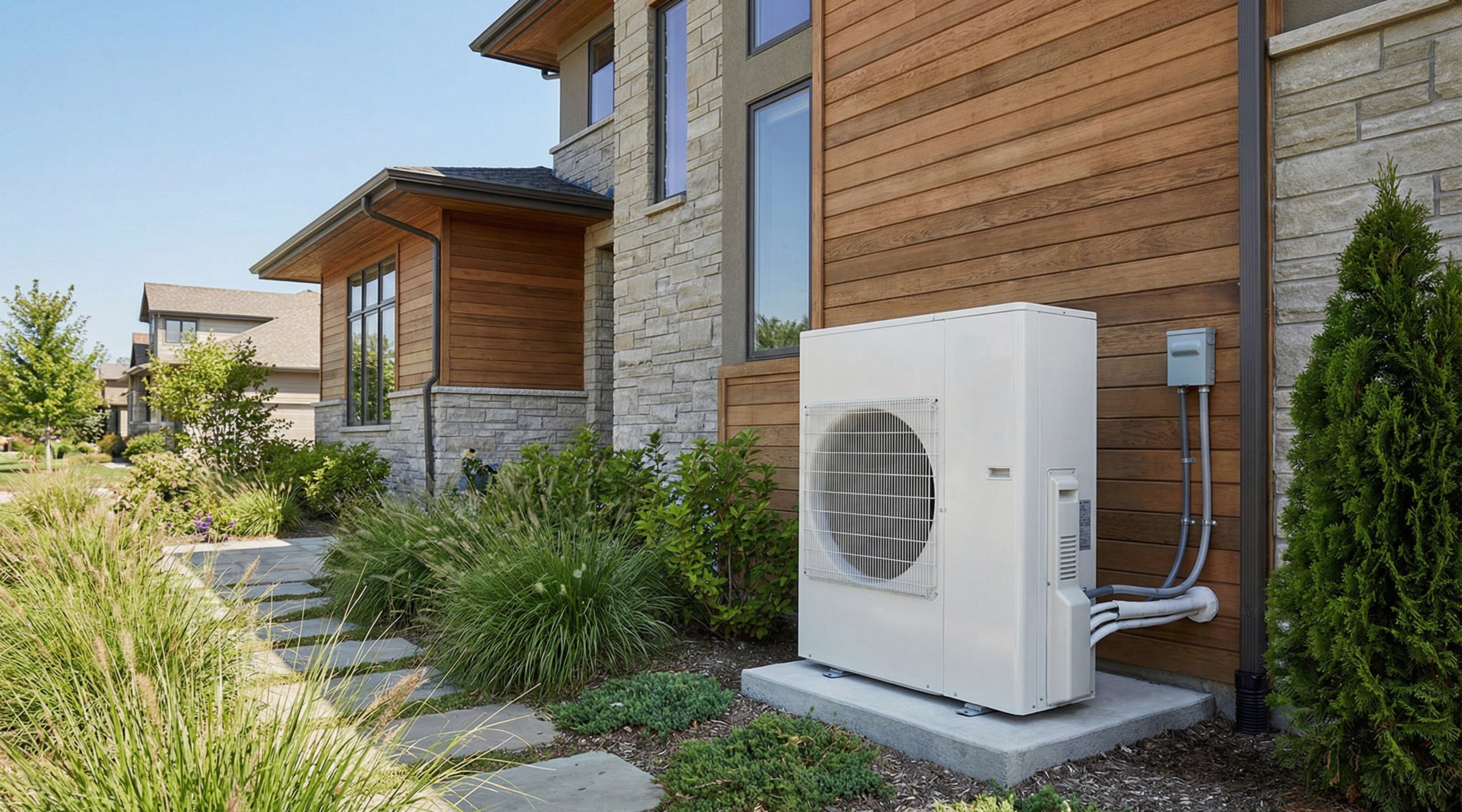
U.S. manufacturers again shipped more heat pumps than gas furnaces in 2025, and the gap kept widening. The numbers from AHRI's 2025 year-end shipment data: roughly 3.6 million heat pump units versus 3.2 million gas furnaces — about 12% more heat pumps. It's not a new milestone. Heat pumps first outsold gas furnaces earlier this decade and have led in four of the last five years, with the margin growing from a slim edge to a double-digit advantage.
The U.S. heat pump market hit $14.81 billion in 2026 by market research estimates. Five years ago, heat pumps were a niche category outside the Southeast. Now they're the default recommendation in new construction across most climate zones.
What's Driving the Shift
Federal money — but the window has closed. Through 2025, the IRA's 25C credit provided 30% (up to $2,000) for air-source heat pumps and the 25D credit provided 30% with no cap for ground-source/geothermal systems. For a $7,000 installed air-source system, that meant $2,000 back — bringing the net cost to $5,000, competitive with a gas furnace plus central AC. That subsidy is what powered much of the 2025 demand. Note that both credits were terminated for property placed in service after December 31, 2025 by Public Law 119-21 (the "One Big Beautiful Bill"); they did not run through 2032 as originally enacted. Systems installed and operational in 2025 can still be claimed on a 2025 return, but installs in 2026 and later no longer qualify.
State incentives may still help. California's TECH Clean California program — administered by the CPUC — has offered $3,000-4,000 per unit for gas-to-heat-pump conversions in existing homes. Funding is limited and was fully reserved as of late 2025, so availability varies; check techcleanca.com for current status. Where state, utility, and (for 2025 installs) federal incentives stacked, a homeowner's out-of-pocket on a $7,000 system could drop to $1,000-2,000.
Efficiency improvements. Variable-speed compressor heat pumps now hit SEER2 20+ for cooling and HSPF2 10+ for heating. Cold-climate models maintain rated capacity down to -15°F. The "heat pumps don't work in winter" objection died somewhere around 2022, but a lot of contractors haven't updated their pitch.
New construction codes. California, Washington, New York, and Colorado all have building codes that either require or heavily incentivize all-electric HVAC in new residential construction. Builders are specifying heat pumps as standard equipment.


What HVAC Contractors Need to Do
If you're still leading with gas furnace quotes, you're leaving money on the table. A heat pump job typically runs 15-25% higher revenue than a furnace-only install, and the customer's net cost after credits can be lower. Win-win.
Get trained. Heat pump installation is not the same as furnace installation. Refrigerant line sets, electrical requirements (most systems need a 30-40 amp dedicated circuit), condensate management, and defrost cycle commissioning all require specific knowledge. Manufacturers including Daikin, Mitsubishi, Carrier, and Trane offer free or low-cost installer certification programs.
Stock appropriately. Lead times on popular heat pump models (Mitsubishi Hyper-Heating, Daikin Fit, Carrier Infinity) are running 2-4 weeks. Contractors who keep one or two common sizes in local inventory can close faster than competitors quoting 3-week delivery.
Learn the incentive stack. With the federal 25C/25D credits gone after 2025, state and utility programs now carry more weight. Your customers don't know about the state rebate, the utility rebate, and the potential local permit fee waiver — you do, or you should. Walking a customer through every dollar still on the table is one of the most effective closing tools in HVAC sales.
Dual fuel is a bridge. For customers who aren't ready to go all-electric — or in areas where natural gas is very cheap — dual-fuel systems (heat pump plus gas furnace backup) offer a middle ground. The heat pump handles 80-90% of heating hours; the furnace kicks in only during extreme cold snaps. It's a higher-margin install than either system alone.
What This Doesn't Mean
Gas furnaces aren't disappearing. The 3.2 million units shipped in 2025 is still a massive market, and the installed base of roughly 60 million gas furnaces will need service for decades. Repair technicians who specialize in gas heating aren't obsolete — there's a 15-to-20-year service tail on every furnace installed today.
But the growth is in heat pumps. New installs, replacements, and the service revenue that follows all skew toward heat pump systems going forward. Contractors who build heat pump capability now will capture the growth. Those who wait will compete for a shrinking share of gas-only work.
For related coverage, see our analysis of the DOE 2027 efficiency standards and the EPA refrigerant transition update.
Sources
- Air-Conditioning, Heating, and Refrigeration Institute (AHRI). "Monthly Shipments / U.S. Heating and Cooling Equipment Shipment Data." ahrinet.org/analytics/statistics/monthly-shipments
- Rewiring America. "Heat Pumps Outsell Gas Furnaces for the Third Straight Year." rewiringamerica.org/research/heat-pumps-outsell-gas-furnaces-third-year
- RMI. "Tracking the Heat Pump & Water Heater Market in the United States." rmi.org/insight/tracking-the-heat-pump-water-heater-market-in-the-united-states
- Mordor Intelligence. "United States Heat Pump Market Size, Share & Growth Research Report." mordorintelligence.com/industry-reports/united-states-heat-pump-market
- Internal Revenue Service. "FAQs for modification of sections 25C, 25D, 25E, 30C, 30D, 45L, 45W, and 179D under Public Law 119-21 (One, Big, Beautiful Bill)." irs.gov/newsroom/faqs-for-modification-of-sections-25c-25d-25e-30c-30d-45l-45w-and-179d-under-public-law-119-21-139-stat-72-july-4-2025-commonly-known-as-the-one-big-beautiful-bill-obbb
- TECH Clean California (administered by the CPUC). "Incentives." techcleanca.com/incentives
Need a repair professional?
Get free quotes from verified technicians in your area.
Find a Pro Near You