

Samsung SmartThings and LG ThinQ Are Actually Starting to Be Useful
Maria Solano
Former appliance warranty claims adjuster turned investigative repair journalist. Maria's 'What Went Wrong' teardown series has made her the most feared woman in the white-goods industry.
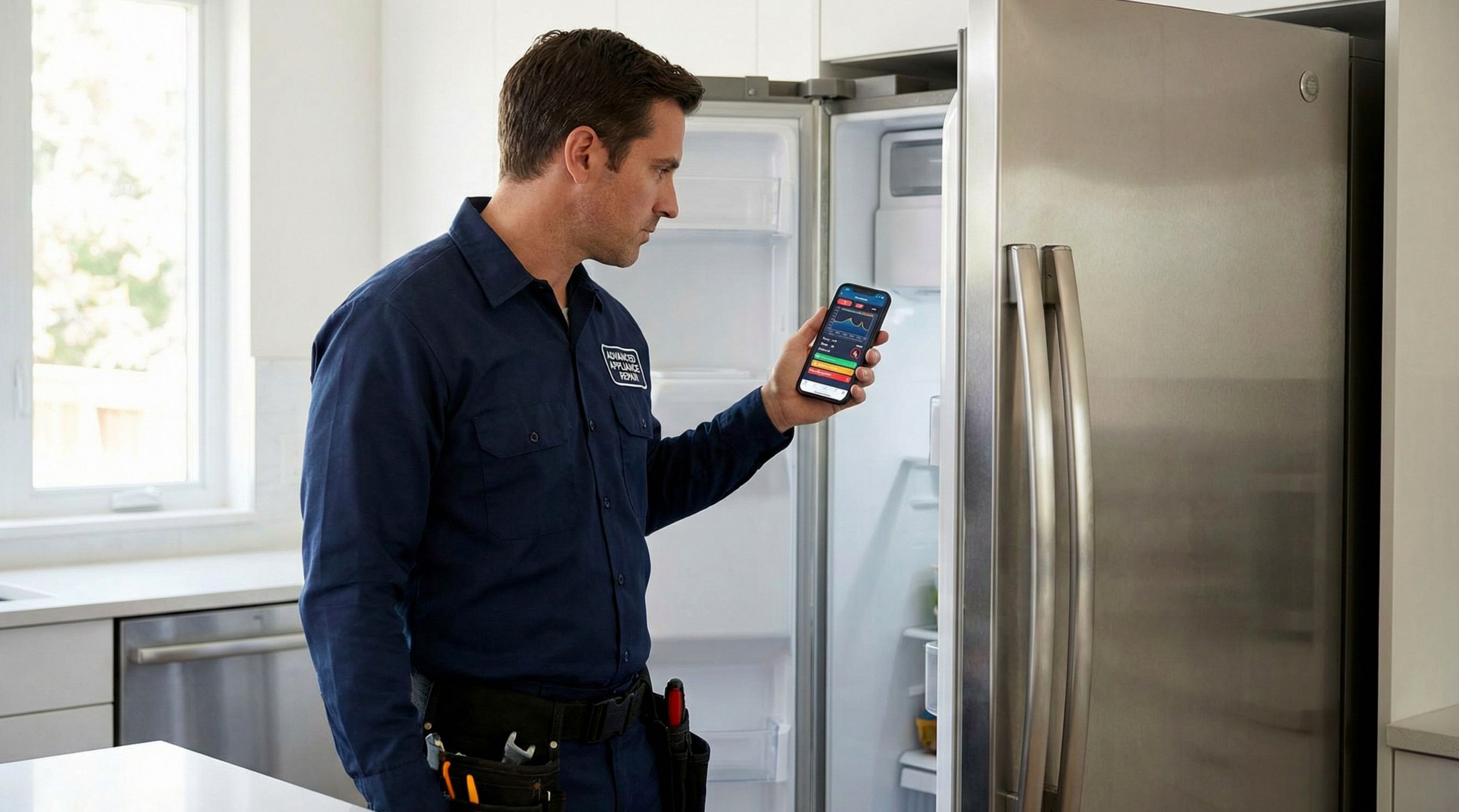
For years, smart appliance diagnostics were a punchline. The refrigerator that texts you when the door is open. The washer that sends a notification nobody asked for. But something shifted in the last 18 months. The latest diagnostic features in Samsung's SmartThings and LG's ThinQ platforms are producing data that actually shortens service calls, and shops that have adapted their workflow around it are seeing measurable results.
Not revolutionary results. Useful ones.
What Works
Samsung's SmartThings now pushes real-time error codes to the customer's phone. When a homeowner calls and says "my Samsung fridge shows error 22E on SmartThings," you already know it's a freezer fan issue before you load the truck. That's 15 minutes of on-site diagnostic time you just skipped. The customer feels like you showed up already knowing what was wrong. Both parties win.
LG's ThinQ platform takes it further with a Wi-Fi-based diagnostic mode that transmits component-level data and error histories, not just the current fault code. The older sound-based Smart Diagnosis (where the fridge beeps into your phone) still fails about 40% of the time in noisy kitchens. The Wi-Fi version is more reliable and more useful.
The standout feature is LG's Proactive Customer Care. It monitors performance patterns and flags anomalies before the customer notices a problem. We've seen documented cases where the system caught a compressor running at abnormal duty cycles two weeks before cooling loss. That's real predictive diagnostics, not marketing fluff.
Add this line to your appointment confirmation texts: "If your appliance connects to Samsung SmartThings or LG ThinQ, please screenshot any error codes from the app before your appointment." Takes five seconds to set up. Saves 10-15 minutes per call when customers actually do it.


What Doesn't
Only about 30% of smart-capable appliances are actually connected to Wi-Fi. Most customers never set up the features, which means you're still doing traditional diagnostics on the majority of calls. The connected percentage is growing on newer models (which prompt for Wi-Fi during setup), but it'll be years before it's the norm.
Samsung's sound-based Smart Diagnosis is still unreliable in field conditions. Quiet room, specific phone placement, stable network. That's a test lab, not a kitchen with a dog barking and a toddler on the floor. Most experienced techs skip it and go straight to manual diagnostics. Can't blame them.
And smart diagnostics can be wrong. Sensors read what they read, but they can't account for a temperature probe that's been repositioned after a previous repair, or a condenser fan that's intermittently seized. The app data is a starting point, not a verdict. Verify everything with a meter.
The Business Case
Shops that have integrated pre-dispatch app data into their workflow report first-trip completion rates improving by 10 to 15 percent. The math is simple: when you know the likely failure before you leave, you bring the right part. One fewer return trip per week adds up to $500-1,500 a month in recovered revenue, depending on your volume.
The flip side is customer expectations. Homeowners who've been monitoring their fridge through SmartThings for three years expect their tech to know the app. Showing up and saying "I don't use that" costs you credibility.
GE's SmartHQ platform is gaining ground too, with a technician-specific diagnostic mode in their Profile and Cafe lines. Whirlpool's Connected Care platform, long behind Samsung and LG, finally added parts identification in its 2025-2026 models. The convergence is clear. Smart diagnostics aren't optional anymore. They're becoming part of the baseline skill set.
Download both apps. Create accounts. Spend 20 minutes learning the diagnostic screens. You'll make that time back on your next Samsung or LG call.
Do I need special training to use these diagnostic platforms?▾
No formal certification exists. Both apps are consumer-facing and free to use. Samsung and LG offer technician-focused training modules through their service portals that cover diagnostic interpretation in a repair context. Worth taking if you run a high volume of connected appliance calls.
Need a repair professional?
Get free quotes from verified technicians in your area.
Find a Pro Near You