

Commercial Kitchen Equipment: What Residential Techs Need to Know Before Taking the Call
Terry Okafor
Master refrigeration tech and NATE-certified instructor who moonlights as the magazine's advice columnist. His 'Ask Big Terry' mailbag has been settling shop disputes and diagnosing mystery leaks since 2011.
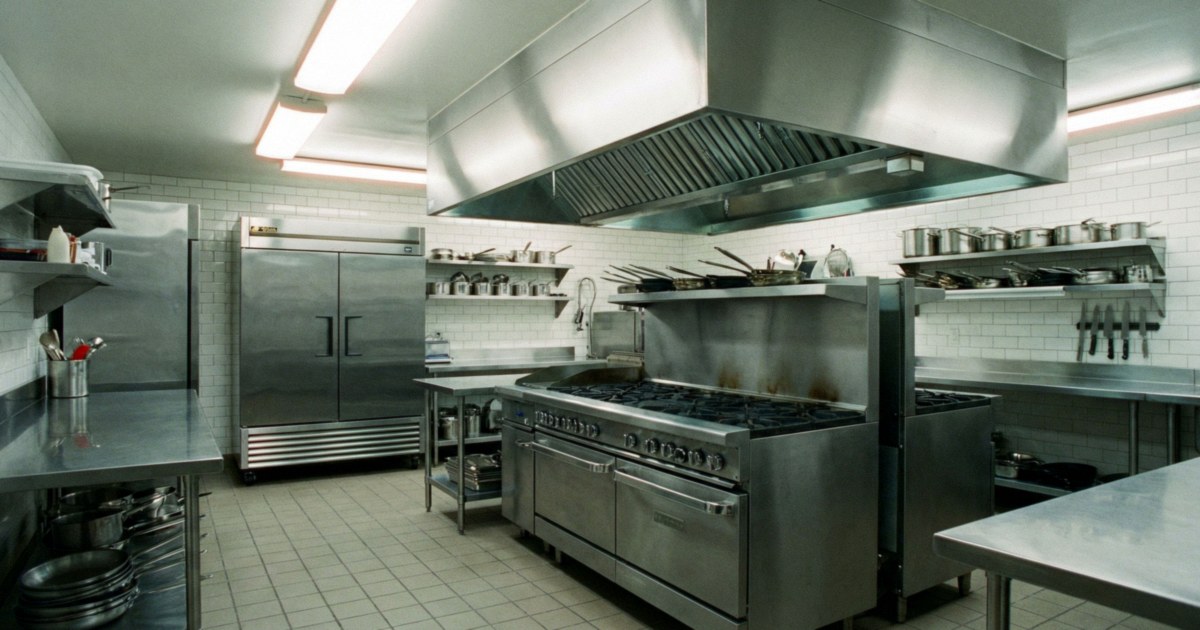
You're getting calls from restaurants and commercial kitchens. Maybe a former customer opened a small café. Maybe a property manager who uses you for residential units has a strip-mall tenant with a broken walk-in cooler. The work sounds like a natural extension of what you already do. In some cases it is. In others, you're stepping into a fundamentally different technical and legal environment.
I'm not here to tell you to turn down commercial work. I've done plenty of it. But the techs who get into trouble — liability trouble, insurance trouble, or physical injury — are usually the ones who assumed commercial was just residential with bigger equipment. It's not. Here's what's actually different, and how to think about which work is safe to take and which isn't.
The Voltage Reality: 208V and Three-Phase
Residential appliances run on 120V single-phase (small appliances, refrigerators, dishwashers) or 240V single-phase (electric dryers, ranges, electric water heaters). You know this system inside out.
Commercial equipment runs on a different power architecture. The two things you'll encounter that residential work almost never produces:
208V three-phase: Most commercial buildings in California are fed with 208/120V three-phase service. Commercial cooking equipment, commercial dishwashers, and walk-in refrigeration compressors are frequently rated for 208V three-phase. This is not 240V with a missing leg. It's a different voltage from a different source configuration, and components rated for 240V do not perform the same way at 208V.
The practical problem: a motor rated for 240V single-phase running on 208V three-phase is technically a wrong-voltage application. Many techs incorrectly assume "240V single-phase" equipment can substitute for "208V three-phase" equipment. It can't. More importantly, the diagnostic readings are different — motor current draws, capacitor requirements, and contactor specifications all differ between 208V and 240V equipment.
480V: Larger commercial facilities — institutional kitchens, large restaurants, commercial food production — may have 480V three-phase service for large equipment. If you see 480V on the nameplate and you've spent your career in residential, stop and decline or call in a commercial electrician. This voltage level has a substantially higher arc-flash energy than 240V residential service. The safety protocols are different, the PPE requirements are different, and residential training does not cover it.
Before you touch any panel or service disconnect in a commercial kitchen: identify the power supply voltage with your meter. Don't assume. The meter tells you what's actually there.
Keep a non-contact voltage tester in your bag at all times. In commercial settings, use it on every wire before you touch it. Never assume a circuit is de-energized because a disconnect is in the off position — commercial kitchens often have multiple disconnect points and circuit configurations that are not immediately obvious.
Gas BTU Ratings: Not Residential Scale
A residential gas range top burner outputs 5,000-18,000 BTU/hr. A commercial range burner runs 25,000-35,000 BTU/hr. A commercial combi oven can draw 100,000+ BTU/hr. The gas supply infrastructure required to feed commercial cooking equipment is sized proportionally.
This matters for diagnosis and for any gas-related work. The regulators, valves, and gas trains on commercial equipment are sized for high-flow applications. Diagnostic procedures — pressure testing, manifold pressure verification, valve leak testing — use the same physical tools but apply to components that are not interchangeable with residential parts and have different specification requirements.
In California, any work on the gas piping itself — not the appliance, but the gas line connecting to it — requires a licensed gas fitter or licensed plumber. A residential appliance tech can diagnose a commercial gas valve, replace it, and verify operation. That tech cannot reconnect a gas supply line to that valve. That's a separate license category. The liability for doing gas connection work without the appropriate license in California is significant.
Know where your scope ends. The appliance is yours. The gas line connecting to it is not.
Certifications, Licensing, and Insurance — The Real Constraints
The most important constraint on commercial kitchen work for residential techs is your liability insurance policy. Pull your policy document before you take any commercial call and read the exclusions section.
Most residential appliance service policies explicitly exclude: commercial equipment (defined by voltage class, weight, or rated BTU input above a threshold), equipment used in food service applications, and work performed in commercial facilities. If you file a claim for a fire or injury that occurred while working on commercial equipment excluded from your policy, you are uninsured for that claim. That exposure is too large to assume by default.
EPA 608 Universal certification is required for refrigerant work at any scale — residential or commercial. If you have Section 608 Universal, you are certified to recover, reclaim, and recharge refrigerant systems of any size. This covers commercial walk-ins and commercial HVAC equipment. If you only have the small appliance (Section 608 Type I) or domestic/commercial high-pressure (Type II) certification, check your specific certification against the equipment before working on it.
California C-20 (HVAC) Contractor License: Required if you're billing for HVAC work commercially. A sole proprietor doing residential repair under a handyman exemption may not qualify for commercial HVAC work under that same exemption. The C-20 is the licensing path for commercial HVAC work.


Crossover Repairs Residential Techs Can Safely Take
That said, there's a real category of commercial kitchen work that residential techs handle safely and profitably all the time:
Commercial reach-in refrigeration (single-phase): A commercial reach-in refrigerator running on 115V or 208/230V single-phase is mechanically similar to a residential refrigerator. The refrigerant is different (R-448A, R-449A, R-507 in modern commercial equipment vs. R-134a in residential), but the diagnostic approach — compressor, condenser, evaporator, defrost system — is the same. With EPA 608 Universal certification, this work is in scope.
Commercial ice makers (single-phase): Ice maker diagnosis and repair on single-phase commercial units (True, Hoshizaki, Manitowoc) is well within residential tech skills with proper certification. Ice maker diagnosis skills transfer directly from residential Samsung/LG ice maker work. The scale is different; the principles aren't. Factory training from these manufacturers is available and worth pursuing.
Commercial dishwasher controls and pumps (single-phase): Restaurant undercounter dishwashers (Hobart LXe, CMA, similar) on single-phase 120V or 208/240V circuits are accessible to techs with residential dishwasher experience. The wash pump, drain pump, and control board diagnostics parallel residential work closely.
Basic gas appliance diagnosis (not including gas line work): If you have a robust gas appliance background from residential ranges and dryers, diagnosing gas valve failures, igniter problems, and thermocouple issues on commercial equipment uses the same principles. The caveat: confirm single-phase power supply, confirm you're working on the appliance not the gas supply infrastructure, and confirm your insurance covers it.
For pricing these commercial calls correctly — because commercial customers pay more and expect more — see our pricing guide for appliance repair in Southern California.
For the oven-side residential context that transitions into commercial range work, our guide to oven not heating covers the diagnostic baseline.
What to Say When You Decline a Call
Part of working commercially — even occasionally — is knowing when to say no and doing it in a way that keeps the relationship. If a restaurant manager calls you about a 480V three-phase walk-in compressor replacement, the right answer is: "That's outside my commercial certification scope, but I know someone. Let me get you a contact."
Having two or three commercial-focused tech contacts in your network to refer those calls to is more valuable than attempting work you're not equipped for. It's also the kind of professional behavior that makes the referral relationship flow in both directions.
Can a residential appliance tech legally work on commercial kitchen equipment?▾
It depends on the equipment type and your insurance coverage. Residential techs with EPA 608 Universal certification can legally work on commercial refrigeration. Gas connection work requires a licensed gas fitter or plumber in California. Your liability insurance policy is the binding constraint — most residential appliance policies explicitly exclude commercial equipment. Read your exclusions before accepting commercial calls.
What certifications do I need for commercial kitchen repairs?▾
EPA 608 Universal certification is required for any refrigerant work regardless of setting. California requires a C-20 contractor license for commercial HVAC work. Gas connection work requires a licensed contractor. Some commercial manufacturers offer factory training programs (Hoshizaki, True, Manitowoc) that are worth pursuing. Always verify your insurance coverage matches the work you're accepting.
What is three-phase power and why does it matter for appliance techs?▾
Three-phase power delivers 208V or 480V using three alternating current legs instead of the single-phase 240V used in residential applications. Commercial walk-in coolers, large commercial dishwashers, and major cooking equipment often require three-phase power. Never assume power supply voltage — always verify with a meter before touching any commercial electrical connection. Misidentifying 208V three-phase as 240V single-phase leads to equipment damage and potential injury.
Need a repair professional?
Get free quotes from verified technicians in your area.
Find a Pro Near YouSources
- U.S. Environmental Protection Agency. "Section 608 Technician Certification Requirements." epa.gov/section608
- California Contractors State License Board. "C-20 — Warm-Air Heating, Ventilating and Air-Conditioning Contractor." cslb.ca.gov
- California Contractors State License Board. "C-36 — Plumbing Contractor (gas piping)." cslb.ca.gov